Thursday, May 29, 2014
Last Class
Today was our last class in West Civ with Mr. Schick. I had a lot of fun with this class this semester. I learned so much from Mesopotamia to Medieval Times. I liked learning about Greece the best. I didn't like learning about the Medieval Time Period. The last test that we took was definitely the hardest one that we took. I liked all of the people in our class, and I had fun in it. Next year, I am going to be in honors western civilization. I think that we are just going to continue from where we left off last year. I wonder who my teacher is going to be. I had a lot of fun in West Civ class, and will miss it.

Tuesday, May 27, 2014
Notes for Test
These are the Notes for Tomorrows Quiz
- Germanic warriors' loyalty is to the lord of the manor
- The new society has roots in customs of various Germanic tribes
- Only priest and church officials could read and write
- French and Franks
- Population shifts became rural areas
- By 511 the Franks are united into one kingdom, with Clovis and the Church working as partners
- In 520, Benedict writes rules for monks
- Vows of poverty (live simply in monasteries)
- Chastity (no marital relations)
- Obedience (listen to church superiors)
- His sister Scholastica writes similar rules for nuns
- Church revenues are used to help the poor
- Christendom: combination of Christianity and a kingdom
- Most of the rest of Europe consists of smaller kingdoms (seven in England alone)
- Clovis' descendants include Charles Martel, known as Charles the Hammer
- Charles Martel's son is Pepin the Short
- Charlemagne - aka Charles the Great
* Know "Charlemagne takes center stage & [cont'd] *
- Treaty of Verdun
Friday, May 23, 2014
More Notes
Even so... Clovis rules the Franks
- Clovis rules the Germanic people of Gaul known as the Franks
- In 496 he has a battlefield conversion - he and 3000 of his warriors become Christians
- The Church in Rome likes this
- By 511 the Franks are united into one kingdom, with Clovis and the Church working as partners
Spread of Christianity
- Church + Frankish rulers = rise in Christianity
- In 520, Benedict writes rules for monks:
- vows of poverty (live simply in monasteries)
- chastity (no marital relations)
- obedience (listen to church superiors)
- His sister Scholastica writes similar rules for nuns
- They operate schools, maintain libraries, copy books
Notes from Yesterday
I was absent from school yesterday, so I copied Ellie's notes so I can use them to study.
- Middle ages= medieval period
- 476-1453 AD
- (from the end of the roman empire to the conquest of Constantinople by the Turks)
- medieval Europe is fragmented
This is a new society
this new society has roots in:
- classical heritage of Rome
- beliefs of the roman catholic church
- customs of various Germanic tribes
5th century Germanic invaders
overrun the western half of the roman empire
causing:
- disruption of trade
- downfall of cities
- population shits to rural areas
Effects of invasion
declining of learning
- romance languages evolve (french, Spanish, Portuguese, Italian)
Germanic kingdoms emerge: AD 400-600
Germanic warriors' loyalty is to the lord of the manor
he provides them w/ food, weapons, treasure
result:
- no orderly government for large areas
- small communities rule
- pope Gregory I (Gregory the great) goes secular (worldly power)
- Church revenues are used to help to poor, build roads and raise armies
- this is a theocracy
- Gregory's spiritual kingdom (Christendom) extends from Italy to England,from Spain to Germany
- hammer defeats a Muslim raiding party from Spain at the Battle of Tours in 732 (if he hadn't won, western Europe could have become part of the Muslim Empire
Wednesday, May 21, 2014
More Notes on Germanic Kingdoms
- A European Empire Evolves
- Franks control largest European kingdom
- The Roman province formerly known as Gaul
- Ruled by Clovis- the Merovingian Dynasty
- Major domo- mayor of the palace - ruled the kingdom
- Charles Martel - Charles the Hammer
- a. extended the Franks' reign to the north, south, and east
- Defeated a Muslim army from Spain at the Battle of Tours in 732- historoic Battle
- A European Empire Evolves [cont'd]
- Charles the Hammer's son - Pepin the Short
- Possibly named for his unusual short haircut
- Working for and with the Pope, Pepin fought the Lombards
- Pope Stephen II named Pepin "king by the grace of God" - beginning the Carolingian Dynasty
- 751 - 987 AD
{So, a Pope can do that? Name someone "king"? Yup.}
- Pepin the Short had two sons. Carolman and Charles
- Carolman died... leaving Charles to take over
- Charlemagne takes center state
- Charlemagne - aka Charles the Great
- Six foot four
- Built the greatest empire since Rome
- Fought the Muslims in Spain
- Fought Germanic tribes
- Spread Christianity
- Reunited Western Europe
- Became the most powerful king in western Europe
- Pope Leo III crowned him emperor in 800 AD after he defended him from an unruly Roman mob
- This signaled the joining of Germanic power, the Church, and the heritage of the Roman Empire
- Charlemagne take center stage [cont'd]
- Charlemagne's Government
- He limited the authority of hte nobles
- He regularly visited every part of his kingdom
- Kept close watch on his huge estates
- Cultural revival
- Encouraged learning
- Ordered monasteries to open schools
- Opened a palace school
- But, his heirs were weenies,,,
- His son - Louis the Pious - was ineffective
- Louis' three sons -
- Lothair
- Charles the Bald
- Louis the German
- Split up the kingdom at the Treaty of Verdun in 843 AD
Tuesday, May 20, 2014
Germanic Kingdoms Unite Under Charlemagne
MAIN IDEA!
- Many Germanic kingdoms that succeed the Roman Empire were reunited under Charlemagne's empire
WHY IT MATTERS NOW!
- Charlemagne spread Christian civilization throughout northern Europe, which is where many of us came from
Setting the Stage!
- Middle Ages: Medieval period
- 500-15000 AD
- Medieval Europe is Fragmented
- Invasions trigger changes in Western Europe
- Invasions and constant warfare spark new trends
- Disruption of trade
- Europe's cities are no longer economic centers
- Money is scarce
- Downfall of Cities
- Cities are no longer centers of administration
- Population Shifts
- Nobles retreat to the rural areas
- Cities don't have strong leadership
- Invasions trigger changes in western Europe [cont'd]
- Decline of learning
- Germanic invaders are illiterate, but they communicate through oral tradition
- Only priest and church officials could read and write
- Knowledge of Greek [and literature, science, philosophy] is almost lost
- Loss of a common language
- Dialects develop in different religions
- By the 800s, French, Spanish, other Roman-bases languages are evolving from Latin
TEST QUESTION: what was the most common language? LATIN
- Germanic kingdoms emerge
- The concept of government changes
- Roman society: loyal to public gov't
- Germanic society: loyal to family
- Germanic chief led warriors
- During peace, he provided food, weapons, treasure, a place to live [the lord's hall]
- During wartime, warriors fought for the lord
- "The king?" Who's that? You want to collect taxes from me? Who the heck are you?
- Franks live in the Roman province of Gaul- their leaders is Clovis
- Germanic kingdoms emerge
- The Franks under Clovis
- Another battlefield conversion [Just like Constantine]
- Clovis and 3000 of his warriors are baptized by the bishop
- The Church in Rome approves of this "alliance"
- Clovis and the Church begin to work together
A simple mathematical equation:
Clovis' military expertise
+
The Church's support and money
_____________________________________
A STRATEGIC ALLIANCE BETWEEN TWO POWERFUL FORCES
- Germanic peoples adopt Christianity [cont'd]
- [Pope] Gregory 1 expands papal power
- Papacy: pope's office
- Secular power: worldy power
- So... under Gregory the Great
Papal Power [Power of the Pope] is Political Power, Presented from the Pope's Palace
- The church can use church money to
- Raise armies
- Repair roads
- Help the poor
- Gregory the Great began to act as a mayor of Rome, and as head of an earthly kingdom [Christendom]
- Germanic peoples adopt Christianity
- 511 AD - Clovis unites Franks into one kingdom
- 600 AD - Church + Frankish rulers convert many
- Fear of Muslims in southern Europe spur many to become Christians
- Monasteries and convents
- 520 AD - Benedict wrote the rules for monks and monasteries
- Poverty, chastity, obedience, study
- His sister Scholastica did the same for nuns in convents
- 731 AD - the Venerable Bede wrote a killer history of England
- Monks opened schools, maintained libraries, and copied books [Bibles, Greek texts]
Friday, May 16, 2014
Go Over Notes
Today in Western Civ, we went over our notes. Since a couple of days ago we took notes, we talked about what notes we had in our blog. I copy my notes word for word because it helps me remember things better. I think that it helps me understand the point to what we are learning more clearly. I copy vocab words, quotes, and important texts from each paragraph We are supposed to put it in our own words, but I don't like doing that. Here are some additional notes that we took today:
- Christendom: a combination of Christianity and a kingdom
- Tithe/tithing: give 10% of what you make in a year to the Church
- Eastern Empire was called, "Byzantine Empire"
- They were doing okay
- Became more Greek than Roman
- Greek intellects
- Socrates
- Plato
- Aristotle
- Education was considered less important
- Mostly only priests were reading
- Common people only learn trade, not education
- Romans were no longer the center of everything
POWERPOINT NOTES
- Feudalism: a political, military and economic system based on land-holding and protective alliances
- In other words: a system is based of personal loyalty to people who can help you
- RICH DUDE (LORD): "I own land; I need people to help me work it and defend it"
- TOUGH DUDES (VASSALS): "There are a lot of us, we can help the rich dudes hold on to their land"
- The Feudal Pyramid:
- KING
- The most powerful vassals
- Nobles and Bishops
- Knights: mounted warriors who recieved fiefs for defending their lord's land
- Peasants: (mostly serfs) Landless, powerless, moneyless, rights-less. Just working the land for "the man" (their lord)
Mind Your Manors
- Manor: the lord's estate
- The lord's manor house
- A chuch
- Some workshops
- 15-30 families
- All on a few square miles
- Good news: It's a self-sufficient community
- Bad news: It's harsh if you're a peasant
How Harsh is it?
- Peasants are poor AND pay high taxes
- Tax on grain
- Tax on marriage
- Church tax (tithe= 10% of their income)
- The live in crowded cottages
- Live with animals and insects
- Eat VERY simply
- But don't worry - the Church says this is your lot in life
- God determines your place in society - so chill
Thursday, May 15, 2014
5/15/14
Today in west civ, we had time to do whatever we wanted to do. Since our class is ahead of the others, we were able to do homework or anything else we had to do. I am glad that we had this time because then we will have less homework. Tomorrow I think that we are going to start a new chapter. We just did an outline on Chapter 9, so now we will start it. I wonder if this is going to be the last chapter that we do before exams. We only have like 14 days of school left which isn't that much!
Wednesday, May 14, 2014
Chapter 9
Chapter 9: After Rome (500-700)
- "The upheaval of the Early Middle Ages ended not in a collapse of civilization but in its renewal. And the first two early medieval centuries set the patterns for how this renewal would later take place in western and eastern Europe."
- The two centuries after the fall of Rome were a time of turmoil in Europe that would continue for five hundred years - a half millennium that counts as the "early" part of the Middle Ages, As with the upheaval of the early Middle Ages ended not in a collapse of civilization but in its renewal, and the first two early medieval centuries set the patterns for how this renewal would later take place in western and eastern Europe.
- In the Germanic kingdoms that has taken over the western half of the Roman Empire, Roman institutions gradually stopped working, cities ceased to be centers of trade and social life, and warfare became more important that education and culture in the lives of the upper class
- Meanwhile, the Roman Empire's surviving eastern half contributed to western Europe's chaos by efforts at reconquest, and then itself came under attack by newly powerful neighbors
Chronology:
- FIFTH CENTURY: Angles and Saxons invade Britain
- 486: Clovis leads Frankish confederacy against Romans and rival Germanic invaders in Gaul
- 527-565: Reign of Emperor Justinian in the Eastern empire
- 542: Plague hits Egypt, then spreads throughout the Mediterranean area adn much of western Europe
- 568: Lombards conquer most of northern Italy
- 570-632: Life of Muhammad
- 595: Missionaries sent by the pope begin to convert the pagans of England
- 711: Muslim invasion of Spain
- 800: Slavs occupy almost all of eastern Europe
Tuesday, May 13, 2014
Rome Fades Away
Rome Fades Away
What a difference a few centuries make
End of an Era
What a difference a few centuries make
- Diocletian
- He rules from 284-303
- It is cool to persecute Christians
- Rome needs a big army (400,000 strong)
- Rome needs a big government (20,000 officials)
- His solution was to divide the Roman Empire in half (Diocletian and Divide)
- Constantine
- Rules from 306-337
- It's cool to BE a Christian
- Conversion to Christianity
- via a cross in the sky (conquer by this!)
- 313- his Edict of Milan proclaims freedom of worship
- Built a new capital in the East
- Byzantium, soon to be known as Constantinople
The Struggle of the Peasants
life in the Fourth Century
- Country dwellers are getting bankrupted by endless tax collection
- New farming system: peasants work for elite landlords on large farms
- Peasants can avoid paying taxes, but they are getting hit just as hard by the landlords
- Paying off debts and being "allowed" to live on the land, in exchange for endless back-breaking work (such a deal!)
- Landowners hold local power as counts and bishops, wielding more real power than the faraway empire
- Foreshadowing feudalism
- Rich people living on the land and having surfs who will work from them. Matters more who your lord is...
The Western Empire Crumbles
- Rome's power is decreasing, while nomadic barbarians gain power
- Western Empire is too poor and begins to be neglected
- Huns migrate from China to eastern Europe
- Visigoths take Spain, and actually capture and loot Rome itself in 410
- Vandals control Carthage and the western Mediterranean
- Other barbarian tribes:
- Ostrogoths in Italy
- Franks in Gaul
- Angles and Saxons in Britain
End of an Era
- From the beginnings...
- 500 BC - the monarchy is abolished
- 450 BC - the Twelve Tables are established
- ...through the glory days...
- 44 BC - end of the line for Julius Caesar
- 27 - 180 AD - the Roman Peace (Pax Romana)
- To the bitter end...
- Constant fifth century invasions by barbarian tribes left the western Roman Empire shattered and crumbling
- The last emperor was a teenage boy installed in 475 by his father
- Barbarians deposed Romulus Augustulus without bothering to kill him
Friday, May 9, 2014
Decline of the Roman Empire
Rise of Christianity
- Jesus spends three years preaching, is killed by Roman Leaders
- Jesus' followers believe he is the Messiah and Savior who has risen from the dead
- Saul (the persecutor) becomes Paul (the evangelist), spreading Jesus' message (one true God, not Roman gods)
- Christianity evolve from cult status to established, official structure
- Priest, bishops, Pope (Bishop of Rome)
- Christian and Jews monotheistic
- This conflicted with Roman beliefs
- Persecution against both was common
- Christianity appealed to the poor, and since there were many poor, their numbers grew
- As it grew, even some Roman leaders embraced Christianity
- AD 313: Constantine has a battlefield conversion
- He saw a cross in the sky and heard, "In his name."
- He issues the Edict of Milan
- A law that said you couldn't persecute Christians
- Became official religion of Rome
- Not only no persecution, but actual approval of Christianity, eventually making it the official religion of Rome
- The Roman Empire and Christianity are now linked in power and influence
Decline of the Roman Empire
- AD 180: Rome has problems
- Economic (trade became risky; taxes were too high; food supply was dropping)
- Military (frontiers were hard to patrol; Roman generals fought for control; soldiers' loyalty declined and mercenaries appeared)
- Diocletian divided the empire into two
- Greek-speaking East (had more resources)
- Latin-speaking West (Rome, tradition)
- AD 324- Constantine becomes emperor over both halves of the empire
- Moves the capital from Rome to Byzantium (renamed Constantinople), where Asia met Europe (now Turkey)
- After his death, empire is divided again
- This time, "barbarian invaders" (Huns, Vandals, Visigoths, Angles, Saxons, Franks) overrun the empire's frontiers
- That's it for the Roman Empire (AD 476)
Thursday, May 8, 2014
Chapter 8
Chapter 8: The Changing World of Rome: Emperors, Christians, and Invaders
- 200 B.C.- A.D. 600
- Instead of dying, the Mediterranean civilization of Greece and Rome began to spread among many still-barbarian northern peoples, until it became the Christian Europe of the Middle Ages."
- The greatest single change that began among the peoples of the empire during the era of the Roman Peace was the spread of a new form of monotheistic religion, Christianity.
- "Christ Victorious": the mosaic in a chapel in the Italian city of Ravenna dates from about A.D. 500, when Rome was beset by invaders and Christians were bitterly divided over beliefs
- Meanwhile, the empire helped bring changes to peoples living outside as well as inside the borders
- Germanic barbarians of northern Europe became wealthier, more highly organized, and military stronger as a result of living as Rome's neighbors during the era of the Roman Peace.
- Barbarians grew stronger
- In addition, the empire was still strong enough to bring about the last and greatest of the changes in civilization that took place under its rule
- As long as Rome had prospered, the emperor's had take little notice of Christianity's growth and spread
- In the empire's time of troubles, they sometimes harshly persecuted it and sometimes deliberately tolerated it
- Eventually, the burden of government and the army became too heavy to bear, the barbarian attacks grew too fierce to be resisted, and the empire began to collapse
Wednesday, May 7, 2014
Rome Test
Today in West Civ, we took a test on the Romans. There were questions from the last quiz that we had. Mr. Schick said that those questions would make up half of the test. I studied those, so I think that I did very well on those. The hardest part about the test was probably where we had to match up the description to the persons name. I think that I knew most of them, but some of them were kind of tricky. I wasn't sure about the one that asked who was someone's grandchild, or something like that. Also, I don't know who was the one who was assassinated at age 28. I think that that was either Caesar or Caligula, but I am not positive. I am pretty confident that I did really good on this test!
Tuesday, May 6, 2014
Quiz Tomorrow
- Who was the first emperor?
- Caesar Augustus
- Caligula
- He was Tiberius' adopted grandson and great-nephew
- Putting him next in line for emperor
- Started off well:
- Bonuses to military
- No more treason
- Bad finish
- Fight with Senate
- Claimed to be a god
- Put statues of himself in Jewish temple
- Slept with other men's wives, and bragged about it
- Indulged in too much spending and sex
- Tried to make a horse a consul and a priest (not positively true)
- Killed him
- Claudius
- Ostracized by his family because of his disabilities
- had either cerebral palsy or polio
- Rose to the occasion: conquered Britain, built roads, canals, and aqueduct; he renovated it
- Had an awful marriage to Messalina
- Unfaithful to him
- Made a plot to have Claudius and her lover Silius the new emperor
- Claudius had them killed
- Religious troubles
- Christianity and Judaism: monotheistic
- Romans had many gods, plus emperor was viewed as a god
- A group of Jews, Zealots, tried to rebel
- Roman troops put them down and burned their temple (except for one wall)
- Holiest of all Jewish shrines
- Half a million Jews died in the rebellion
- Persecution of Christians
- Romans were harsh toward those who would not worship the emperor
- Used for "entertainment" purposes
- Despite oppression, Christianity grew quickly
Friday, May 2, 2014
Assassination and Another Caesar
Assassination and another Caesar
- Romans at home and aboard applauded Caesar's deeds, but of senators who were disturbed by his successors
- Caesar had become a Greek-style tyrant
- And there was a traditional and honorable way of getting rid of tyrants
- Caesar appeared in the Senate house, unarmed and unguarded, according to his custom, and crowd of senators struck him down with their daggers
- Caesar's murder did not restore the Republic; instead, his death produced yet another crop of warlords and yet more bouts of civil war
- Mark Antony and Octavian were rival loyalists of Caesar, and each managed to attract some of Caesar's legions, which they used to fight a brutal war against each other in Italy
- The partners then divided the Roman world, with Octavian based in Rome, Lepidus in North Africa, and Mark Antony in Alexandria
- Finally, in 31 B.C., the rulers of the two halves of Rome's empire went to war
Chapter 7: The Roman Peace
- 30 B.C.- 235 A.D.
- "The era of the Roman Peace was one of massive social, religious, and cultural changes that would form a new pattern of western civilization."
- Augustus's new system of government kept many features of the Roman Republic, allowed subject peoples a good deal of self-rule, and brought Rome's destabilizing expansion to a halt. The result was two hundred years of stability that modern scholars call the Roman Peace
- Within the empire, the Roman version of Greco-Roman civilization prevailed in the Western territories, and the Greek version was dominant in the East
- In many ways, the dominant international civilization undermined the traditions of other peoples of the empire
- Hadrian's Wall: constructed at the order of the emperor Hadrian between A.D. 122 and 128
LO 1- The Rule of the Emperors
- Soon after Octavian's triumph at Actium, the Senate conferred on him a new title
- At the time, Augustus did his best to make it seem as if no such historic change was under way
- Unlike Sulla and Caesar, Augustus refused the offer of a long-term dictatorship
- Princeps: "first citizen," a traditional Roman name for prominent leaders who were considered indispensable to the Republic that came to be used by Augustus and other early emperors
- By arrangement with the Senate in 27 B.C., Augustus was confirmed as commander in chief
- The people's assemblies, on the other hand, lost what remained of their power to elect magistrates and make laws
- In spite of avoiding Caesar's ope exercise of supreme power, Augustus followed the dictator's even more arrogant-seeming example of accepting religious worship of himself
- After Augustus won supreme power, Greek cities in Antolia began building shrines and sacrificing to "Rome and Augustus"
- Augustus also acquired the tile of Father of the Fatherland and took seriously the father duty of supervising the behavior of his "household"- especially of the upper classes in Rome
- Of course, there was a good deal of make-believe in all this
- Still, the Romans already believed that there was something divine about every paterfamilias and every matron; add they regarded community life as a kind of large-scale family life and most other peoples of the empire had similar beliefs
- Ensuring peace and stability involved not only changing the way the Roman city-state worked, but also reorganizing the whole of Rome's empire
- First, he brought the system of government appointments under his personal control
- Second, Augustus showed respect for local institutions and encouraged provincial leaders to fulfill their responsibilities
- Third, Augustus reorganized the army to ensure the loyalty of the rank-and-file soldiers
- Then Augustus gradually brought about his single most drastic reform
- In this way, Augustus and his successors broke with the Roman tradition of citizen-soldiers to crate the world's first professional standing army
- Even after Augustus's troop cuts, his army was still far larger than the forces that Romes had usually maintained in the past
- "Augustus and his successors broke with the Roman tradition of citizen-solider to create the world's first professional army."
- Augustus was convinced that if Rome's new peace and stability were to last, the changes he had made in its government system must continue after his death
- Having no sons of his own, Augustus finally settled of Tiberius
- At first, the emperors who succeeded Tiberius during the first century A.D. emerged usually after vicious family infighting
- Near the end of the first century, the Flavian dynasty, too, came to an end following the assassination of another tyrannical emperor
- Subsequent rulers for much of the second century happened to have no sons by blood who survived them, so they, too, adopted sons whom they also proclaimed as their successor
- caesar: the imperial title given to the designated successor of a reigning emperor
- augustus: the imperial title given to a reigning emperor
- Toward the end of the second century, however, the line of emperors by adoption and designation came to an end when Commodus, Marcus Aurelius's son by blood, outlived him, ruled irresponsibly, and was eventually murdered
- In this way, Augustus's governing structure endured until the troubled times of the late third century
- Roman Peace: a term used to refer to the relative stability and prosperity that Roman rule brought to the Mediterranean world and much of western Europe during the first and second centuries A.D.
Thursday, May 1, 2014
Nero 2
Today, we continued watching the video on Nero. I don't like this video or movie at all. It is really weird and Nero is a strange person. He acts like he has some sort of mental issue. I don't think that anyone knows what exactly was wrong with him, but there was definitely something. Since he is an emperor, no one can tell him what to do. Everyone must listen to him which is unfortunate because he is an awful ruler. I think that tomorrow we are watching the movie again.
Wednesday, April 30, 2014
Nero
Today in West Civ, we watched this video on a Roman empire named, Nero. Apparently he was really insane and crazy. From what I saw in the video, he seemed like a weirdo. He wanted to use all this money to rebuild Rome, and since they didn't have enough money, they robbed the temples and used that money. Some people in the Senate wanted to murder him and someone told, so people were threatening to kill someone. It was really strange. I think that this guy Nero is really creepy and the movie is also really strange.
Tuesday, April 29, 2014
Julius Caesar
- Senate Murdered Caesar
- most of them came in with hidden knives and stabbed him
- Not all of the senate took part
- Best friend Brutus even murdered him
- Shakespeare
- Wrote story called "Julius Caesar"
- "Et tu, Brute?"
- Even You?
- Supposed to be his last words
- No one know what his last word actually was
- Octavian-AKA Caesar Augustus
- Caesar's grand-nephew
- Became known as Caesar Augustus
- August: means to be revered/honor
- Nearly a god in the people's eyes
- Became leader at age 18
- Begins the Pax Romana - a period of peace and prosperity
- Built roads, aqueducts (brought water to the cities)
- Set up civil service to take care of roads, the grain supply, even a postal service
- Dies at age 76 in A.D.14, and passes power to...
- Tiberius
- Jesus
- Was a Roman Citizen and a Jew
- At 30, he began his ministry (A.D. 31-33), preaching to the poor (lots of them) in the empire, and reaching out to outsiders
- Statements like "My kingdom is not of this world" made the Romans (and the Jews) nervous, and they began to plan his execution
- The governor of the Roman province of Judaea, Pontius Pilate (prompted by Jewish high priests), sentences Jesus to death by crucifixion
- Wikipedia says Jesus is a "historical figure"
- Paul is instrumental in telling the world about Jesus' life, death, resurrection, and message
- He travels far and wide
- He writes letters to many of those he spoke to- these epistles are part of the New Testament
- If not for the efforts of Paul, it is likely that Jesus remains an obscure preacher, instead of the central figure of the world's largest religion
- Muhammad, Newton, Jesus, Buddha, Confucius, and St. Paul of Tarsus
Friday, April 25, 2014
Ancient Rome Video
Today in West Civ, we watched a video called "Ancient Rome Video." We were going to watch it on the projector but the speakers were not working. Since the speakers weren't working, we watched it on our laptops instead. Here are some notes that took:
- Gaul vs. Romans
- Caesar
- Alesia, Gaul 52 B.C.
- Titus Labienus
- General, Caesar's Army
- Garius Crastinus
- Veteran Centurion
- Mark Antony
- General, Caesar's army
- Rome wins; Caesar Wins
Thursday, April 24, 2014
Notes from Textbook
Today in West Civ, we took notes on the textbook. Mr. Schick told us what was important, and what to underline. It makes it easier because then we know exactly what is important and what we need to know for the test. After we would underline something, Mr. Schick would explain it. Tomorrow maybe we will take more notes or maybe we will do something else.
Wednesday, April 23, 2014
Outline Pg. 99-101
Soldiers, Warlords, and Civil War
- With the changes in Rome's society and politics, the character of its armies and their commanders also changed
- The soldiers began looking for these benefits to their own commanders
- The first of the civil wars took place between 88-82 B.C.
- Rome's first experiment with one-man rule had not been encouraging, and the Senate and the other institutions of the Republic returned to their traditional functioning
- Julius Caesar
- Came from an old patrician family
- Triumvirate: in ancient Rome, an alliance of three politicians that enabled them to control the Republic's decision making
Foreign Conquest, Civil War, and Supreme Power
- With the help of his new friends, Caesar won an appointment as proconsul of a province that included the southern regions of Gaul
- Meanwhile, on Rome's eastern frontier, Crassus had led an army to crushing defeat by the neighboring empire of Parthia
- Pompey was hastily commissioned to defend the Senate, but his forces were no match for Caesar's veterans
- Caesar moved swiftly to make himself supreme ruler of the Republic
- Caesar used his new powers to attack the grave problems facing Rome
Assassination and Another Caesar
- Romans at home and abroad applauded Caesar's deeds, but there remained a stubborn core of senators who were disturbed by his successes
- Caesar's murder did not restore the Republic, it caused more civil wars
- Mark Antony and Octavian were rival loyalists of Caesar, and each managed to attract some of Caesar's legions, which they used to fight a brutal war against each other in Italy
- "But that which brought upon him the most apparent and mortal hatred was his desire of being king; which gave the common people the first occasion to quarrel with him, and proved the most specious pretence to those who had been his secret enemies all along." -Plutarch
- The partners then divided the Roman world, with Octavian based in Rome, Lepidus in North Africa, and Mark Antony in Alexandria
- Finally, in 31 B.C., the rulers of the two halves of Rome's empire went to war
Tuesday, April 22, 2014
Presenting Projects
Today in West Civ, Carly, Ellie, and I presented our projects. We made a PowerPoint and made food. Each of us talked about the food that we made and then gave everyone one. I think that we did pretty well. After we presented, another group presented their project. This group made food also. I think that they made some sort of cake. We had to grade the other groups and say how they did with their presentations.I don't like grading other peoples projects. Tomorrow I think that other groups will will present their projects.
Friday, April 11, 2014
Before Spring Break
Today, I was not in West Civ. I had the induction for the National Art Honors Society. The ceremony was also for Quill and Scroll. We had a ceremony and guest speaker. Then we got our certificates and flowers. On my certificate, my name was written "Harley" instead of "Hailey". I found it really funny. Since I wasn't in West Civ, I missed taking the test. I made up the test after the ceremony. I thought that it was alright, some were hard. I got confused when the questions were asking about monarchy and stuff like that. I think that I did pretty well though. I am so excited because today is our last day before spring break. I am glad that we have a good amount of days off. Now, I am glad that we did Cyber Day's, because we still have our days off!
Thursday, April 10, 2014
More Notes on Rome
Roman Legion
Punic Wars
- The soldiers
- If you needed to attack someone they would do it
- The "police"
- or army
- divided into two section
- one legion is 5000 people
- They didn't get paid
- They wanted to do it to defend there country
- Century:
- 80 people
- Infantry
- soldiers on foot marching
- "ground troops"
- Cavalry:
- men on horse back
- If they could shoot on a horse you were really talented
Punic Wars
- Carthage vs. Rome
- 3 wars
- Rome won all
- First was trying to win Cecily
- Second with Hannibal riding on elephants
- idea was to go up and down the peninsula, but could never get to Rome
- Never knew that Carthage was coming in from the north
- If Carthage won, it would have been the end of the Roman Empire
- Third was Romans attacks Carthage
- Latifundia:
- A huge estate of farms that people buy
- Farmers can't cope, they are low on hope, so they move to Rome
- Gracchus brothers:
- Rich are getting richer
- Poor are getting poor
- Came up with a reasonable solution
- Give some land back
- The law got passed
- Senate got made and beat Tibirius to death with a chair and threw his body in the river
- People buy up family farms
- Made chickens have bigger breasts as a way to get more money
- But for the chicken that isn't fair
Wednesday, April 9, 2014
Ancient Roman Cookies
Today in West Civ, we worked on our projects. Carly, Ellie, and I made a Google Docs for our project. I made a couple of slides about the cookies. I am making a couple of slides that has the ingredients in cookies, how they originated, and pictures of making the cookies. I am going to make a test batch, and then I am going to make a good batch to bring in. I am glad that we were able to work on it in class, because it helped get stuff done. Tomorrow I hope that we can work on the project tomorrow also.
Tuesday, April 8, 2014
Notes On Romans
Etruscans
- Made grid sections
- Master Road builders
- Roads were mostly muddy dirt piles when it rained
- Helped people get places quickly
- They had to be dependable
- Introduced gladiator fighting which was a huge part of Roman identity
- Made people not realize how bad there lives were
- The arch was another Etruscan breakthrough
- Coliseums were where they mad Christians go against lions
- We got our language for the Latins
- Plebeians were the lowest class
- They ran stores and grew food
- Patricians were highest up
- The consuls were two of them
- Senate: the aristocrats if your dad was in it, you would be too
- 12 Tables- First laws
- This helped the Plebeians, they got in trouble for things that weren't illegal
- Assembly was like the senate but for Plebeians
- IF you were elected to the Assembly you were called a tribune
- Aristocracy-Senate
- Democracy-Assembly
- Monarchy-2 consuls
- There was two so not one would become two powerful
- If they needed a person to make a quick decision they would use a dictator
- You were only dictator for 6 months, to get you through the crisis
- The consuls were in power for 1 year. Then, you could only run again after 10 years
Homework
- Rome and Carthage fought in the Punic Wars.
- Rome won all of the wars
Saturday, April 5, 2014
Roman Food
Today in West Civ, we decided to work on our project. Ellie, Carly, and I are making food. I am going to make a Roman cookie. The ingredients include honey, flour, butter, and sesame seeds. I am not sure if it is going to taste good at all, but we will see. I will probably make a test batch to see if they taste good. Carly got a cookbook on Roman foods and she is going to pick something from their to make. I am pretty sure that Ellie is going to make cheese balls or something. I hope that our project turns out great.
Thursday, April 3, 2014
Outlining the Chapter
Today in West Civ, we went through the chapter in the book and underlined what is important. This was very helpful because now we know what we have to study for the test. I hate when we have to outline the chapter, because I don't know what is considered important. I know that the vocab words and things in quotes are important. Also, usually the first sentence in the paragraph is important. I liked having Mr. Schick tell us what we had to underline because we are sure that we will not miss anything and it is a lot less time consuming. I wonder what we are going to do tomorrow in West Civ.
Wednesday, April 2, 2014
Rome
Today in West Civ, we got our tests back, and started to take notes on Rome. I got a 93% on the test which is very good. For the question about which country wasn't a member of "Western Civilization"? I put United States, but the correct answer is China. Also circa means circa, about, and around. Also Greek city-states resembled counties, not states. I got all the others correct, I just have to remember the Aegean is in the middle, and Ionian is on the left side. Today, some of the notes we took today were about Rome. We learned about the myth Romulus and Remus and how they were raised by a wolf. Romulus was how Rome got its name. We also learned about how Rome was a combo of three governments, monarchy, aristocracy, and democracy. The United States copied the Romans on that. I think tomorrow we are going to continue to take notes on the Romans.
Tuesday, April 1, 2014
Rome Rap
Today in West Civ, Mr. Schick did a rap about Rome. He let us video tape it. Mr. Schick wrote it and recorded it himself. It was pretty good. The rap was about Rome and facts about it. The rap was to the song Low. After Mr. Schick did the rap, he told us about what we are going to do for the Rome chapter. We are going to have an 100 point test before we go on break and then when we come back, we present our projects. I am in a group with Ellie and Carly. I think that we are going to make food that the people in ancient Rome ate. I wonder how this project is going to end up. We have to finish it before break, so we don't have to work on it during break.
Thursday, March 27, 2014
Class Lecture
Today in West Civ, we had a class that was like a lecture. Mr. Schick talked about Socrates and Plato. He told us able this fable that a man named Plato told. It was about how people are faced forward and watched a wall and shadows of people were projected on it. They didn't know that behind them was a fire and the figures of the people were also behind them. One prisoner was sent free, but the sun was too bright for him. I liked class because we didn't have to take notes or anything. We just had to listen. I am so glad that we have the day off tomorrow. That means that we have a three day weekend, and then we don't have West Civ on Monday. That means that the next time we have class is next Tuesday.
Wednesday, March 26, 2014
Greeks Test
Today in West Civ, we took a test on the Greeks. I thought that the test was going to be really hard. I studied my note and the worksheet that he gave us. Mr. Schick told us that we could use our blogs. Being able to use our blogs was helpful. When I got the test, i remembered seeing the multiple choice questions before, and I remember going over them. I just put down what I had before. The fill in the blanks was not that hard, but I had to look at my blog for some of them. The hardest question for me was knowing where to put the Aegean and Ionian Sea on the map. I wasn't sure where they went. Other then that, I think I did really well on the test. Since we are done this chapter, I wonder if we are going to continue to study the Greeks, or if we are going to move on to something else.
Tuesday, March 25, 2014
Studying for the Test
Today in West Civ, we watched the ancient Greeks video. Tomorrow we have a test, so we watched it to review. I am going to study my old blogs that have some notes in them. I am also going to study any notes that I have in the copybook. I think that I took some notes in it, but I am not sure. Finally, I will probably read over that worksheet that we had. We got a worksheet that had a bunch of people, places, and events in ancient Greece. I think that the test tomorrow is going to be hard. I think its going to be hard because there are so many different people, and I get confused with them. I also get confused with some of the seas. I get confused with the Ionian, Aegean, and Mediterranean Sea. Hopefully the test tomorrow won't be to hard.
Sunday, March 23, 2014
Notes on Ancient Greece
PEOPLE OF GREECE
Aspasia:
Aspasia:
- had an influence on government
- Pericles and her fell in love, never got married
- Pericles got rid of his wife for her
- Pericles made Parthenon
Isagoris:
- Last of the dictators
- Rude to his people; corrupt
- So raped a high women, but got away from it
- People didn't like him
- People fought for 3 days and eventually won and threw him out
Cleisthenes:
- Found him after Isagoris, wanted him to lead
- Thought regular people should have more decision
- Wanted to get everyone involved, Democracy
Ostracize: to be cast out, sent away. (did that to Cleisthenes)
Greeks and Persians had different complexions. Natural enemies
Xerxes and Darius:
- From Persia
- Invaded marathon
- Xerxes is son of Darius
- Come at Greeks with 1 million men
Phedippides:
- Sent to get help
- Ran 26 miles to another town to warn them
- Ran to Sparta (100 miles) tells Spartans, but dies
Xerxes came to Athens:
- Athenians decided to flee
- Bring women and kids to an island
- Persians decided to burn city and kill anyone left
- Greek man goes to Persia
- Said he was coming to their side
- At night, Persians came down straight
- Greeks are there ready to fight when sun comes up
- All a trick
- Lost a ton of ships and lost
Pericles:
- 30 year rule
- Hubris: so arrogant and full of yourself and think you cant go wrong
- Dealine League (United Nation): city-state defending Greece, not Sparta
- He decided that in the midst of their city doing so well, he wants to attack Sparta
- Build a wall around Sparta
- Take navy and surround Sparta
- Allow them to not get anymore supplies
- Surrounder
- Spartans marched and got supplies other places
- Ships brount in supplies brought sick people with plague
- Go from being perfectly fine to die in 3 days
- 1/3 to 1/2 of people died, including Pericles
- Spartans and Persians got together
Oracle of Delphi:
- Flights of birds
- Predict future
- Tell by the way guts of animals came out
- Entrails of animals
- Needed help and told people they were screwed
Thursday, March 20, 2014
Close Call
Today in West Civ, Mr. Schick had to grade our projects. He had to re watch them and read our storyboard since we had presented them a week ago, so he had to remember what we did. Carly, Ellie, and I got a 90%. I am very happy with that grade. For our video, we did pictures of the main places in Athens, and we each did a storyboard. Carly added music to our video which apparently took a long time to do. The music went nicely since it was "Greek Pop." While Mr. Schick was grading the projects, Carly, Ellie, and I talked. Ellie also quizzed Carly and I in math since we had a math quiz next mod. I think that i did pretty well on the math quiz. Tomorrow the quarter ends. I am really happy with my grades, I just hope that math stays an "A" and that my English gets bumped up. I can't believe that we are already done with 75% of the school year already! Also, at the end of class we watched this video called "Close Call." It was very funny, but also kind of crazy that those things could happen.
Wednesday, March 19, 2014
No Teacher Today
Today, my blog for West Civ is the 30 questions and the 4 answers in the blog below. Since Mr. Schick wasn't here, we had to do that for the class. We were in the gym, and I only finished the 30 multiple choice. I just finished the 4 short answers for homework. Tomorrow we have class, and Mr. Schick will be back.
West Civ Work
Multiple Choice:
- Mostly Fertile land isn't a characteristic
- Approximately 3/4 of Greece is covered by mountains
- The term barbarian originally came from the Greek "barbarous," which originally meant "Non-Greek."
- A megalithic structure is a massive rough-cut stone used to construct monuments and tombs
- A tribe is a social and political unit consisting of a group of communities held together by common interests, traditions, and real or mythical ties of kinship
- Tribes were governed by warrior kings or queens
- The Greeks were the first European barbarians to make contact with civilization.
- The United States wouldn't be considered a member of "Western civilization."
- The Ionian Sea is located west of the Greek mainland.
- The sea located the east of the Greek mainland is the Aegean Sea.
- Aegean people lived on grains, vines, and olives
- The Minoan civilization arose on the island of Crete.
- The Mycenaeans established settlements along the Greek mainland southern shore and on some islands
- The Mycenaeans built massive walls to protect themselves from attack.
- The Dark Ages were a period of Greek history in which the population dropped, ships no longer sailed, and writing fell out of use.
- The Greeks joined the Phoenicians as the leading commercial and seafaring nation of the Mediterranean.
- "C" means circa
- The city-states that dotted the coastlines around the Mediterranean Sea were called colonies
- Greek city-states most closely resembled modern-day states.
- Oligarchy were the form of government in which small group of citizens dominated, and the power of the majority was limited in various ways
- Democracy is a form of government in which decisions were made by the majority of adult male citizens
- Tyranny is a form of government in which a self-proclaimed dictator held power
- Monarchy is a form of government in which power is held by a single ruler, and often passes along form father to son
- Spartans used oligarchy
- Spartan males began their military training at age seven
- Athens was the wealthiest city-state in the ancient Greek world
- The acropolis was the high fortified citadel and religious center of an ancient Greek town
- Peloponnesus was the southern peninsula where Sparta was located
- Triremes were massive fighting ships with three banks of oars, used to ram or board enemy ships
- A hoplite was a heavily armed and armored citizen-soldier of ancient Greece
Short Answer:
- This was a period called, Dark Ages which lasted from 1150-800 B.C.
- The tiles of the stories is the "Iliad and the Odyssey."
- The word "Mediterranean" originally meant "in the middle of the earth" or "between lands."
- Prominent and long-established Athenian land-owners were called aristocrats.
Tuesday, March 18, 2014
Quizlet Notes
Today in West Civ, we used this quizlet to study for our test: http://quizlet.com/11153365/flashcards. Tomorrow in class, we have a sub so we will be working on the Cyber Day assignment that we had yesterday. Since we didn't have West Civ, we didn't have to do it. That is why we are working on it tomorrow.
- What were the major crops the Aegean people subsisted from?
- A: Grain, Vines, and Olives
- Barbarian (barbaros): "Non-Greek"
- Megalithic structure: massive rough-cut stones used to construct monuments and tombs
- Tribes were governed by warrior kings or queens, chieftains, tribal leaders chose by warriors
- The first European barbarians to make contact with civilization was the Greeks
- Aegean's engaged in shipbuilding, piracy, metalworking, fishing, farming and lumber jacking
- Who were the first people to speak Greek?
- A: Mycenaeans
- Mycenaean civilization developed no later than 1600 B.C. and during the Bronze age.
- Minoans are inked to the Mycenaeans
- What brought the Mycenaean Civilization to an end?
- A: There is no clear understanding of what brought their civilization to an end
- Colony: a new city-state settled in oversea territory sponsored by the local city-state
- How many letters comprised the Greek Alphabet?
- A: 30
- What were the three great civilizations of ancient world by 500 B.C.
- A: Mesopotamia, Egypt, and the Greeks
- Acropolis: high fortified citadel and religions center of an ancient town
- Parthenon: the "Place of the Maiden" that sits atop the acropolis. Statue of Athena is in there
- More than a billion dollar building^
- Polites: a citizen of a city state in the Greek speaking world
- Hoplite: a heavily armed and armored citizen-solider of the Greek speaking world that had bronze helmets and armor
- Every able bodied male comprised the army
- SLIDE 1-27^
Friday, March 14, 2014
Sub Today
Today in West Civ, Mr. Schick wasn't there. We had a sub. Since Mr. Schick wasn't there, we watched another video on Athens. The video was about The Greeks. IT talked about how Athens went against the Persians in a war. Even though the Athenians were outnumbered 2 to 1, they were still victorious. The Athenians found silver, but decided to spend it on those big powerful boats for battle. The Athenians used those boats in the next battle against them and the Persians, and they showed no mercy. The Athenians had won again! WE were supposed to finish the worksheet that we already started. I finished mine. Since today is Friday, we won't have class agian until Tuesday. I think that we will go over the worksheet then.
Wednesday, March 12, 2014
Notes on Greeks
- Greek theatre had two themes: comedy and tragedy
- Oedipus Rex:
- Told he was going to kill his father- did in a car crash
- Marry his mother- did because he didn't recognize her
- Blinded himself because he didn't want to see the disapproval of people
- Tried to escape fait, but couldn't
- Had a child with his mom
- People were so amazed that he could make it look like he blinded himself
- Written 2500 years ago
- So much to analyze
- The Greeks understood stuff
- Surprising that so much of the architecture is still standing because it has been around for a long time
- Located in an earthquake area
- Potters made vases to transport olive oils to other countries
- Took so much pride in everything so they always tried to do their very best
- Ex: making pots really well
- Wanted to be heroic like the heroes
- Made the huge boats
- They were amazingly built, took a lot of synchronization, and went flying fast
- Spartans did it by depriving themselves and making themselves fighting machines
- Athenians, tried to do their very best, and to learn everything
- Athenians weren't lazy
- Americans were lazy
Tuesday, March 11, 2014
Presenting Projects
Today in west civ, we presented our projects. A lot of people did Athens, but one person I think did Sparta. Carly, Ellie, and I did Athens. First the groups showed their project. Then, we watched the presentation a second time, and they explained what the slide was about. For our project, we each did one storyboard and I did the Movie, but Carly had to fix it for some reason. Then when we presented it, we explained what was on each slide. I wonder what we are going to do next in west civ since we finished with our projects. I think we will probably have at test or continue to learn about Sparta and Athens.
Friday, March 7, 2014
Mr. Perry Teaches
Today, Mr. Schick wasn't in class today. He was on Senior Retreat, so we had Mr. Perry as a sub. I have never had Mr. Perry as a teacher, but some of my friends have. We just watched a video and finished the worksheet. Carly didn't have earphones, so I shared mine with her. The worksheet took a while to finish, but eventually we finished it. Now I am doing my blog. Sometimes i forgot that the blog is due Saturday night, because I usually do my homework on Sunday. Now that I ma doing my blog now, I don't have to worry about that. I am glad that we finished the worksheet, because now I can use it to study, because i have a feeling we will have a test on it. We don't have class on Monday, so the next time our class meets is on Tuesday. That is the day that our project is due! Carly, Ellie, and I need to finish that soon!
Thursday, March 6, 2014
Carly, Ellie, and I
Today, we had the class to work on our projects. We tried to figure out how to get music onto the Movie Maker, and that was hard. Them, Ellie was trying to figure out how to get the storyboard to work, which is very complicated. Also, Carly said that our video had to many of the same picture, which it didn't. For Tuesday, we have to finish the storyboard and edit the video. This project is a lot more then i thought that it was going to be. I knew what we had to do, I just thought that we could choose between making a storyboard or a video. Hopefully, we will eventually finish our project.
Wednesday, March 5, 2014
Watching the Video
Today, we had a shortened class. Luckily, Mr. Schick changed the due date of our video to next Tuesday. That is very good because Ellie, Carly, and I still need to finish that. I think that we are going to work on it on Thursday, and probably some day over the weekend. I am glad that we are working with partners because then the work won't be too much. We continued to watch the video on Greece. The video talked about Sparta and how they conquered so much land of Greece. Spartans seemed to have a really hard life. I think that its crazy that they made seven year old train for the army. I think that that is awful. They are still little kids and probably don't know whats happening. I think that the Spartan was of life was very hard and nothing about it was easy.
Tuesday, March 4, 2014
People of Athens
Today we started to watch a video in Western Civ about Athens. Athens was built on an acropolis which was a huge rock. It was very good to defend yourself, because you could see the enemy coming, and it was hard for them to get to you. Also, Persian tried to take over Greece, but Greece kept on winning battles. We also talked about aristocrats. Greece was originally run by an aristocracy. It was a miserable life for the people who weren't aristocrats. They weren't considered slaves, but they were maybe one tiny step up from being a slave. I am surprised that Persia wasn't able to take over Greece, since it was so small and Persia was so big.
Monday, March 3, 2014
Snow Day and Cyber Days
Today we didn't have school, which meant cyber day. I don't like cyber days because we get a lot more work then we would if we had school. But, I kind of do like then because when June comes around and we are off school, I will be glad that I did. Anyway, today we were supposed to write a blog even though we didn't have school. I am actually not sure if we are supposed to do a blog since we didn't have class today. I m just going to write one anyways because it doesn't take that long. We have a two hour delay tomorrow, I wonder if we will be off. If we are off then I have to work on our project with Ellie and Carly.
Friday, February 28, 2014
Matt and Phil Taught the Class
Today in class, Matt and Phil taught the class. They read and talked about the notes that they took on LO3. Some notes that they had are:
- Only a from thousands live in Greek City State, but Athens reached up to 250,000
- Phalanx: a unit of several hundred hoplites, who closed ranks by joining shields when approaching the enemy
- Tyranny: rule by a self-proclaimed
- A tyrant in ancient Greek, wasn't a ruthless person. This was just a person who took oven
- Over time the word "tyrant" became made in a bad way
- The way of life that dedicated male citizens entirely to the service of the state. The farms were worked by the helots.
- Male citizens took part in democracy
- No: women, children, immigrants, slaves, etc.
- Triremes: massive fighting vessels with banks of oars. Men steered the oars three rows of oars (triremes- "tri")
- Sparta: the military idea
- Helots: non citizens forced to work for landholders in the ancient city-state of Sparta
- The Spartans were the descendants of Greeks who had conquered part of the southern mainland (The territory of Laconia)
*Know Geographic Features of Greece
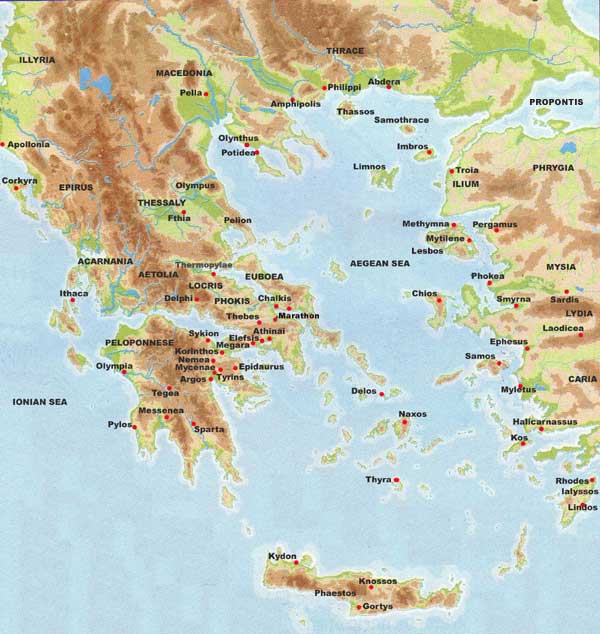
- Adriatic Sea
- Aegean Sea
- Ionian Sea
- Crete: island, at the bottom
- Athens
- Sparta
- Peloponnese
- Mediterranean Sea- middle of the earth
Thursday, February 27, 2014
Working with Ellie and Carly
Today West Civ, we had a sub. Mr. Schick wasn't here, so he left instructions on his blog and told us what to do. We had to make a Google Doc Presentation about Sparta and Athens. I worked with Ellie and Carly. It was fun working with them, and we learned a lot. I am not sure if our PowerPoint is due tomorrow. I did a slide about women in Sparta and Athens and the government. I think that this helped us learn about the lesson without having to sit and read the book. I bet that we are going to have to present our PowerPoints in class. I am glad that we got to work with partners, because it made less work and it made it more fun. We almost finished our presentations, and will probably finish them tomorrow in class!
Wednesday, February 26, 2014
LO3
LO3 Citizens and Communities: The Greek City-States
- Acropolis: the high fortified citadel and religious center of an ancient Greek town
City-States and Citizens
- The notion of citizen participation seems to have originated partly in geography
- City-States started to develop when the Assyrians were reaching for power westward from Mesopotamia
- An Athenian Owl- that was the slang name of this tetradrachma because of the owl, the sacred bird of Athena, on the reverse side
- Hoplite: a heavily armed and armored citizen-solider of ancient Greece
- Phalanx: a unit of several hundred hoplites, who closed ranks by joining shields when approaching the enemy
- Poorer citizens fought as light-armed infantry, harassing the enemy ahead of the phalanx's charge or covering its vulnerable flanks
- "Alongside Mesopotamia and Egypt there now appeared a third great civilization: that of classical Greece"
Monarchy, Oligarchy, Tyranny, Democracy
- Monarchy: a state in which supreme power is held by a single, usually hereditary ruler
- Triremes: massive fighting vessels with three banks of oars, used to ram or board enemy ships
- Tyranny: rule by a self-proclaimed dictator
- Democracy: in ancient Greece, a government in which all adult male citizens were entitled to take part in decisions
- In the earliest times of classical Greek civilization, the communities that would become city-states were ruled by kinds and their leading companion warriors, as described in the epics of Homer
- But other city-states, particularly those that developed into large commercial centers, gave far more power to the majority
- In these large city-states, social conflicts sometime led to the emergence of tyranny
- Like most tight-knit communities, Greek city-states were in many ways narrow and exclusive
- Sparta: The Military Ideal
- The Spartans were the descendants of Greeks who had conquered part of the southern mainland, the territory of Laconia
- Along with this government system there went a way of life that dedicated male citizens entirely to the service of the state
- helots: non citizens forced to work for landholders in the ancient city-state of Sparta
Athens: Freedom and Power
- To the Athenians, the Spartan life was not worth living
- Aristocrats: members of prominent and long-established Athenian families
Tuesday, February 25, 2014
More Notes
- Adriatic Sea
- 20% good for farming
- Valleys covered 1/4 peninsula
- Diet of grains, grapes, and olives
- Lack of resources most likely caused Greek colonization
- 48-80 degrees (winter/summer)
- Began at 2000B.C.
- Mycenae located on a rocky ridge and protected by 20ft. thick wall
- Kings dominated Greece 1600-1200B.C.
- Controlled trade in the region
- 1400B.C. Mycenaean invaded Crete and absorbed Minoan culture and language
- Around 1200B.C. sea people began to invade Mycenae and burnt palace after palace
- The Dorians moved into the war-torn region
- Far less advanced, economically collapsed, and writing disappeared for 400yrs
- Stories were passed on by word of mouth
- Blind, poet, and old
- Homer lived at the end of the "Greek Dark Ages"
- Recorded stories of the Trojan War and The Iliad and the Odyssey (written 750-700B.C.)
- Trojan war was probably one of the last conquests of the Mycenaeans
- Odyssey was 12,110 line of dactylic hexameter
- Arête: virtue and excellence
- Epics: narrative poems celebrating heroic deeds
- Myths were created to explain creation
- Zeus: leader of the gods
- Hera: Zeus' wife
- Athena: goddess of wisdom
Saturday, February 22, 2014
LO2: The Aegean Encounter
- The scene of this encounter was a region stretching from mainland Greece across the Aegean Sea
- Farming wealth from this region came from a combination of grain fields, vineyards, and olive groves
Minoan Civilization
- About 2200BC, a distinct civilization, known today as Minoan arose on the Aegean island of Crete.
- This civilization drew its wealth from control of the surrounding seas and from thriving trade with many eastern Mediterranean lands, above Egypt.
- The Master of the Animals: this Cretan gold pendant, made about 1700BC, shows a powerful being with geese in each hand, and a bull's horns looming behind him
The Arrival of the Greeks: Mycenaean Civilization
- At the time that Minoan civilization arose, great changes were taking place in the lands that stretched for thousands of miles to the north and east of Crete
- There is no way of knowing exactly when, where, or how the Greeks developed into a separate ethnic group, but at the time that they made their way into their new homeland, they seem to have been a European barbarian people much like any other
- The Mycenaean Greeks were a warlike people whose leading warriors rode into battle in horse-drawn chariots and who protected their settlements with massive walls
The "Dark Ages"
- Mycenaean civilization lasted until shortly after 1200BC, when it fell victim to the same regional crisis that involved the downfall of the Hittites and the attacks of the Sea People on Egypt
- "The minstrels' listeners absorbed the traditional values that the heroic songs celebrated- the values of a warrior aristocracy that was at home on both land and sea."
- In the eighth and seventh centuries B.C., as their wealth and population grew, the Greeks joined the Phoenicians as traders, travelers, and settlers across the sea
The Renewal of Greek Civilization
- Colony: in ancient Greece, a new city-state settled in an oversea territory by a group sponsored by a city-state located elsewhere
- Oracle: a priest or priestess who was believed to give answers that were inspired by a god or goddess to questions from worshipers at a temple
- By about 800BC, the Aegean region, like the lands to its south and east was on the way to recovering from the crisis
- All the same, the Greeks maintained a sense of oneness which was expressed above all in their common religion
- As much as it inherited from the Aegean past, this renewed civilization was very different from the old one- mainly as a result of new influences from the changing lands to the south and east
- In the early development of their civilization, the Greeks began by doing what the Babylonians, the Hittites, and countless other people had done before them
Friday, February 21, 2014
The First European Civilization: The Greeks Chapter 3 & Why the Greeks Rocked
- Barbarians are people that had a distinctive way of life, based on farming and warfare
- Greeks invented Democracy
- Citadel and Shrine: the Athenian Acropolis was already ancient when its temples were rebuilt after Persian invaders destroyed
- Over 3 thousand yrs. up to the time of the Persian Empire, civilization had spread from its Sumerian and Egyptian homelands right across southwestern Asia and northeastern Africa
- Even before the historic encounter, the way of life of the peoples of Europe had undergone many changes and advances
- Tribe: people held together by there way of life, clothes they wore, what they liked to do, what they ate, religion, etc.
- Stonehenge: the most famous megalithic structures was built by a farming and trading people in the west of England
- New ideas
- Incredible art forms
- Democratic government w/ citizen participation
- Innovators in warfare
- 4000BC- farming and village life spreads from Sumerian and Egyptian lands across SW Asia and NE Africa, and the European continent
- 3500BC- some are organized enough to construct megaliths, massive rough-cut stones used to construct monuments and tombs, such as Stonehenge (finished in England in 2000BC), consisting 160 massive boulders weighing up to 50 tons (100,000lbs) each, stacked in circled and aligned to the movements of sun and moon
- From 2500BC on- Indo European nomads migrated from the steppes in eastern Europe
- Their language would evolve into Greek and Latin
- Their lives centered around strength and courage, comradeship and loyalty, contests and battle
- Thinner populations than Egypt or Mesopotamia- they formed tribes, social and political unit consisting of communities held together by common interest, traditions, and real or mythical ties of kinship
- Tribes were headed by powerful hereditary chieftains, thought of as kinds (or, rarely, queens)
- This is how Europe came to be populated by speakers of Indo European languages who were skilled in farming, metalworking, trade, and warfare
- No cities, no written records, no fixed structures of government
- They were barbarians (from Greek barbaros-"non-Greek")
- They adopted the way of life of those they encountered, and as they traveled (from 2000 BC to AD 1000), this is how civilization eventually spread throughout Europe
- The distinctive civilization the Greeks developed is the first that counts as definitely "Western"
- Mountainous peninsula
- Mountains cover 3/4
- Approximately 1,400 islands in the Aegean and lonian Seas
- Location shaped its culture
- Skilled sailors
- Poor natural resources
- Difficult to unite the ancient Greeks because of the terrain; developed small, independent communities
- Approximately 20% suitable for farming
- Fertile valleys cover 1/4 of peninsula
- Because of geography the Greek diet consists of grains, grapes, olives
- Lacks of resources most likely led to Greek colonization
- Temperatures range from 48 in the winter to 80 in the summer
Thursday, February 20, 2014
Checking the Test
Today in West Civ, we got our tests back. I got an 88% which i was very happy about. The first page of the test was hard. I thought that I didn't know any of those answers, but I only got one of those questions wrong. I got the question about what weapon wasn't invented or something like that. We went over the answers so that we will have them to study for for finals. I am glad that we do this because it will make it so much easier to study when finals come around. I wonder what we are going to learn about next in Western Civilization.
Wednesday, February 19, 2014
Pyramid Challenge
Today in Human Geo, we did the Pyramid Challenge. Doing the Pyramid Challenge was really hard to do. You have to get the correct combination, and if you don't, then you have to start over. I was partners with Ellie, and we couldn't figure out the combination the entire class! At first we hired servants, and you weren't supposed to do that. Then, we picked the wrong location and building materials. We also picked the wrong supplies. Once we figured out that there was an "Advice" button, it helped us a little bit more. Then we had to steer a boat and that took a long time. Mr. Schick showed us a way for us to skip that step. When we started to get closer to the correct combination, it would take us further in the game. But, after moving on a little, it would say that we failed. For homework, if we complete the game, then we get some credit. After class, I finished the game! That game was a very hard and frustrating game to play!
Tuesday, February 18, 2014
Chapter 3 Outline
The First European Civilization: The Greeks (2200-400BC)
- "Within classical Greek civilization there appeared ideas, art forms, and types of government whose influence on western civilization has lasted down to the present day."
- The earliest Greek civilization was very much an offshoot of the ways of life of their eastern neighbors. Citadel and Shrine: the Athenian Acropolis was already ancient when its temples were rebuilt after Persian invaders destroyed them in the 5th century
- Barbarian-a term used to describe the distinctive way of life based on farming, warfare, and tribal organization that became widespread in Europe beginning around 2500BC
- Megaliths: massive rough-cut stones used to construct monuments and tombs
- Tribe: a social and political unit consisting of a group of communities held together by common interests, traditions, and real or mythical ties of kinship
- Over tree thousand yrs. up to the time of the Persian Empire, civilization had spread from its Sumerian and Egyptian homelands right across southwestern Asia and northeastern Africa
- Even before this historic encounter, the way of life of the peoples of Europe had undergone many changes and advances
- The early Europeans cannot have had any sense of common identity, but time most of them came to share a distinctive way of life
- "When a leading warrior died, his horses and chariot, his bronze swords and daggers, and his gold and silver drinking cups would all go to the grave with him- presumably so that he could go riding, fighting, and drinking as a comrade of the gods in the afterlife."
- People began to speak languages of Indo-European origin that were distant ancestors of Greek and Latin
- Stonehenge: the most famous megalithic structures was built by a farming and trading people in the west of England
- About 2200bc a distinct civilization, known today as Minoan arose on the Aegan island of Crete
- The Master of the Animals: this Cretan gold pendant made about 1700BC shows a powerful being with geese in each hand and bull's horn looming behind him
- Mycenaean civilization lasted shortly after 1200BC
- The Greeks settled in mainland Greece
Friday, February 14, 2014
2 Questions!
Short Answer A: Name and describe three technological innovations or inventions of the ancient Egyptians.
The ancient Egyptians invented some things that are still used today. One invention was the sailboat, which they used for traveling up and the Nile. They also invented the calendar. They made it with 365 days, which is what we still use today, to make a better sense of the seasonal events. Lastly, one other invention the Egyptians came up with was hieroglyphs. This was the very first writing form that started in 3100BC and was made up of small pictures.
Short Answer B: Describe three important features of the Egyptian pyramids.
A very interesting and important feature that the Egyptian pyramids had was that they were covered in marble. Inside the pyramids there were stone sculptures and interior paintings that depicted humans and gods in series of regulated poses often in profile without perspective, but were highly effective. One pyramid that we looked at closely in class was The Great Sphinx of Giza. One very cool feature was that it had a recumbent lion with a human's head. The Great Sphinx of Giza is the oldest monumental statue in the world.
Thursday, February 13, 2014
Cyber Day Essay
In our Western Civilization class we are studying
the ancient Egyptians. We have learned so much about them so far. In my next
two paragraphs I will explains the social hierarchy of the ancient Egyptians and
the importance of the Nile River in the lives of the Egyptians. I will use my
notes that I have taken in class to help me write my essay. Both of these two topics are both key point to
what we have studied so for. I know that both of these things were very
important to ancient Egyptians and there way of life back then.
Ancient Egypt society was set up in a hierarchy. Depending on where you were on the hierarchy showed how respected or what importance to Egyptian civilization you had. The hierarchy went, slaves and servants at the bottom, farmers, artisans, merchants, soldiers and scribes, government officials (nobles and priests), and at the top there was the all-powerful pharaoh. The pharaoh was the highest of them all in ancient Egypt. The pharaoh was the political and religious leader of the Egyptian people. He or she held the title of ‘Lord of the Two Lands’ and ‘High Priest of Every Temple.’ Pharaohs were called god-king and were all-powerful. They were worshiped as a god and connected to the other major Egyptian gods and goddesses. Under the pharaohs there were the nobles. The nobles were known as the “white kilt class” because that is what they wore. These people were the priests, physicians, and engineers. The scribes and soldiers were under the nobles. The scribes kept records, told stories, wrote poetry, described anatomy and medical treatments. The soldiers used wooden weapons with bronze tips and some rode chariots. Then, under the scribes and soldiers were the merchants. Merchants used the bartering system. This meant that they might accept bags or grain for payment. Later the use of coinage came about. The artisans were under the merchants and they would carve statues and reliefs that showed military battles and scenes of afterlife. Under the artisans were the farmers. The farmers raised wheat, barley, lentils, and onions which all benefitted from irrigation of the Nile River. Lastly, at the very bottom of the social hierarchy, were the slaves and servants. Now being a slave in Egypt wasn’t nearly as bad as it was being one in America back in the day. The slaves and servants just helped the wealthy with household and child raising duties. This was how ancient Egyptian civilization was set up.
Ancient Egypt society was set up in a hierarchy. Depending on where you were on the hierarchy showed how respected or what importance to Egyptian civilization you had. The hierarchy went, slaves and servants at the bottom, farmers, artisans, merchants, soldiers and scribes, government officials (nobles and priests), and at the top there was the all-powerful pharaoh. The pharaoh was the highest of them all in ancient Egypt. The pharaoh was the political and religious leader of the Egyptian people. He or she held the title of ‘Lord of the Two Lands’ and ‘High Priest of Every Temple.’ Pharaohs were called god-king and were all-powerful. They were worshiped as a god and connected to the other major Egyptian gods and goddesses. Under the pharaohs there were the nobles. The nobles were known as the “white kilt class” because that is what they wore. These people were the priests, physicians, and engineers. The scribes and soldiers were under the nobles. The scribes kept records, told stories, wrote poetry, described anatomy and medical treatments. The soldiers used wooden weapons with bronze tips and some rode chariots. Then, under the scribes and soldiers were the merchants. Merchants used the bartering system. This meant that they might accept bags or grain for payment. Later the use of coinage came about. The artisans were under the merchants and they would carve statues and reliefs that showed military battles and scenes of afterlife. Under the artisans were the farmers. The farmers raised wheat, barley, lentils, and onions which all benefitted from irrigation of the Nile River. Lastly, at the very bottom of the social hierarchy, were the slaves and servants. Now being a slave in Egypt wasn’t nearly as bad as it was being one in America back in the day. The slaves and servants just helped the wealthy with household and child raising duties. This was how ancient Egyptian civilization was set up.
The
Nile River was beyond important to the Egyptians. This was their life source.
The Nile is 5000 miles long and was the Egyptians major provider to life. It
flowed south to north and Egyptians lived alongside of it. The Nile flowed into
the Mediterranean Sea. The water from the Nile was used for drinking,
irrigating, bathing, and transportation. The Egyptians made sailboats to use as
transportation on the Nile. Every July the Nile would flood and every October it
would leave rich soil for farming. The Delta was attached to the Nile and is a
broad, marshy triangular area of fertile silt. Managing the river required
technological breakthroughs in irrigation. As you can see, the Nile was clearly
so important to the lives of Ancient Egyptians.
Subscribe to:
Comments (Atom)